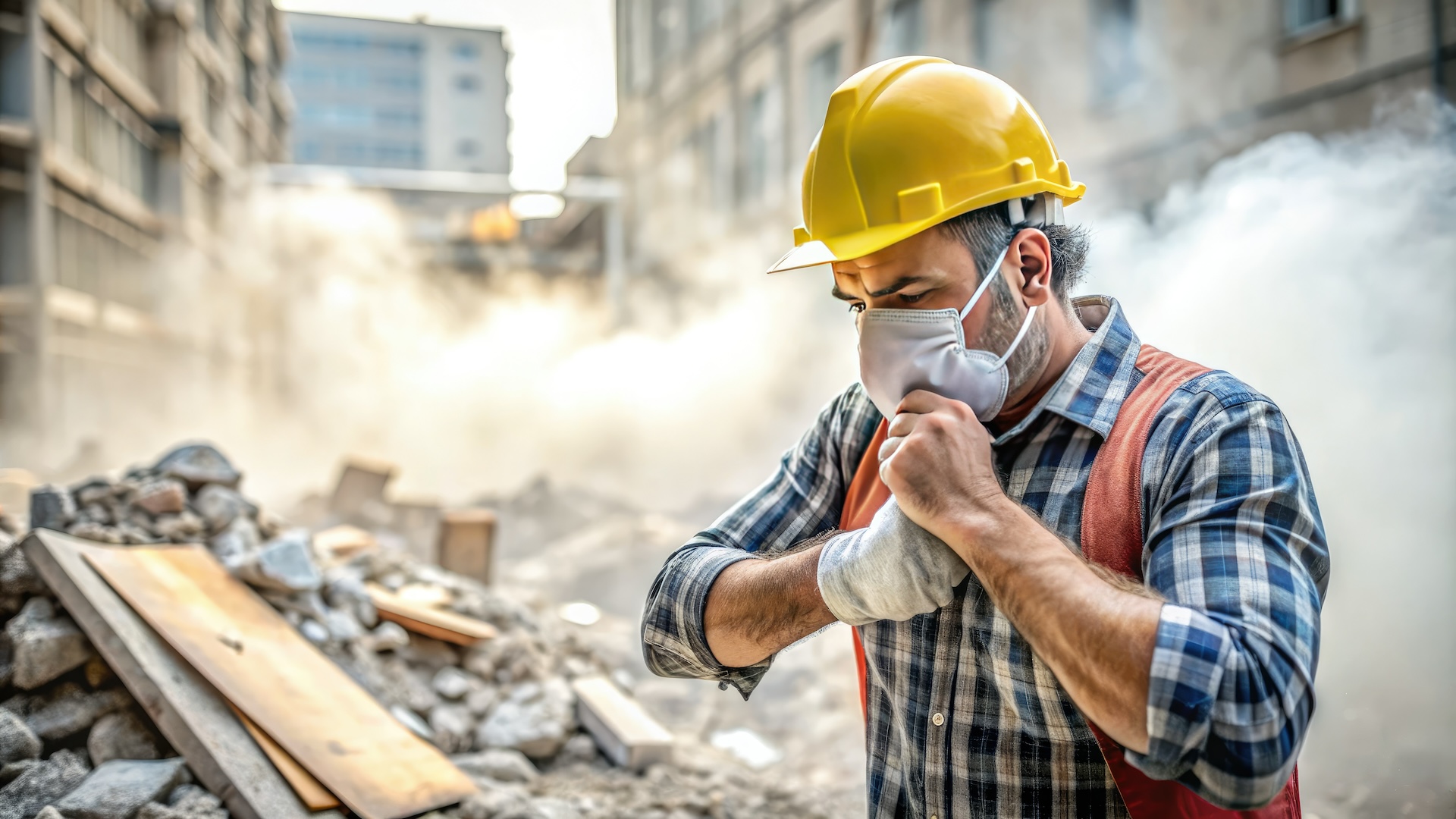
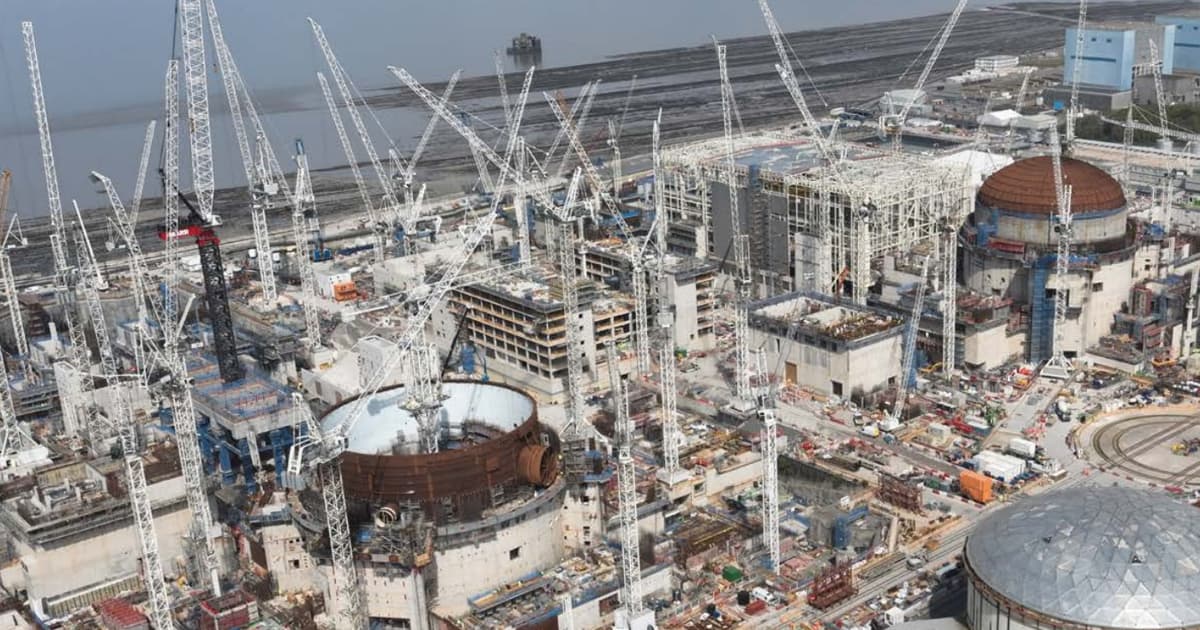
Bylor Joint Venture required safety training that could reach a large, varied construction workforce operating on one of Europe’s most safety-critical sites, Hinkley Point C. Off-the-shelf training couldn’t reproduce the specific hazards, equipment, and environments involved. IkigaiXR built four bespoke VR modules covering the site’s “hidden hazards”: General Awareness, Dust & Fumes/Silica, Hand-Arm Vibration Syndrome (HAVS), and Noise Management – designed from the ground up around the same interaction-fidelity methodology behind everything we build.
01
Bylor Joint Venture, Hinkley Point C Nuclear Construction
02
Four IOSH-aligned VR training modules covering hidden occupational health hazards
03
Bespoke simulation development, behavioural-science-led interaction design
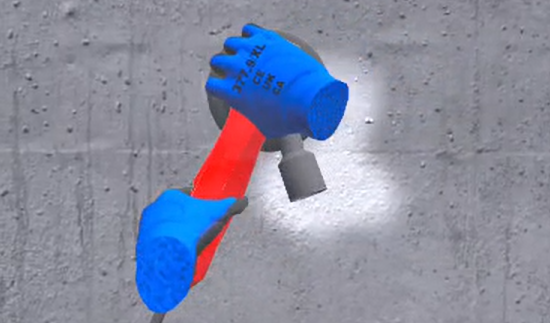
Most safety training explains a hazard, then shows the correct procedure. We built Concrete Finishing the other way round.
The learner starts the task with no controls in place — no RPE, no extraction — and grinds concrete exactly as an untrained worker might. They experience, safely and immersively, what uncontrolled respirable crystalline silica exposure actually feels like: vision narrowing, breath laboured, the tool cutting out as the moment overwhelms them.
Then the consequence catches up. A future version of themselves, years on, on oxygen, explains they didn’t feel the damage at the time — they didn’t understand what they were risking until it was too late.
Only then does the learner return to the same task and learn to do it properly: applying the Hierarchy of Controls, selecting and fitting the right respiratory protection, setting up extraction and exclusion zones — and redoing the grind safely, this time watching the exposure reading on a monitor drop into the green.
The lesson isn’t told to the learner. It’s lived by them, corrected by them, and then proven by them — in that order. It’s the same behavioural-science principle behind Our Methodology: people don’t retain what they’re told nearly as well as what they’ve felt the cost of getting wrong.
The problem: hazards you can’t always see
Dust and fumes, vibration exposure, noise damage — these aren’t hazards a worker necessarily notices in the moment, which is exactly why they’re dangerous. Classroom training can explain the risk; it can’t reproduce the sensory reality of encountering it. Bylor needed training that let workers genuinely experience these hazards safely, building real risk perception rather than just risk awareness.
Every interaction, behaviour, and environment was tested throughout development — and re-tested whenever testing parameters changed, including on modules already built. In safety-critical simulation, “good enough” isn’t good enough. The goal at every stage was for the user’s brain to simply accept the interaction as natural, freeing their attention for the actual safety lesson rather than the mechanics of the simulation itself.
Number of workers to train
5000+
with plans to transfer to SIzewell C
IOSH Approved
In-progress
All sims in programme
Programme Total Sims
5
Covering all lifesaving rules
IOSH Approved
This module is currently submitted to IOSH as a pilot for formal course approval — the first of the four-module programme to go through the process, ahead of extending the same approach across General Awareness, HAVS, and Noise Management.

Facing a hazard training generic modules can’t reach?
Let's Chat